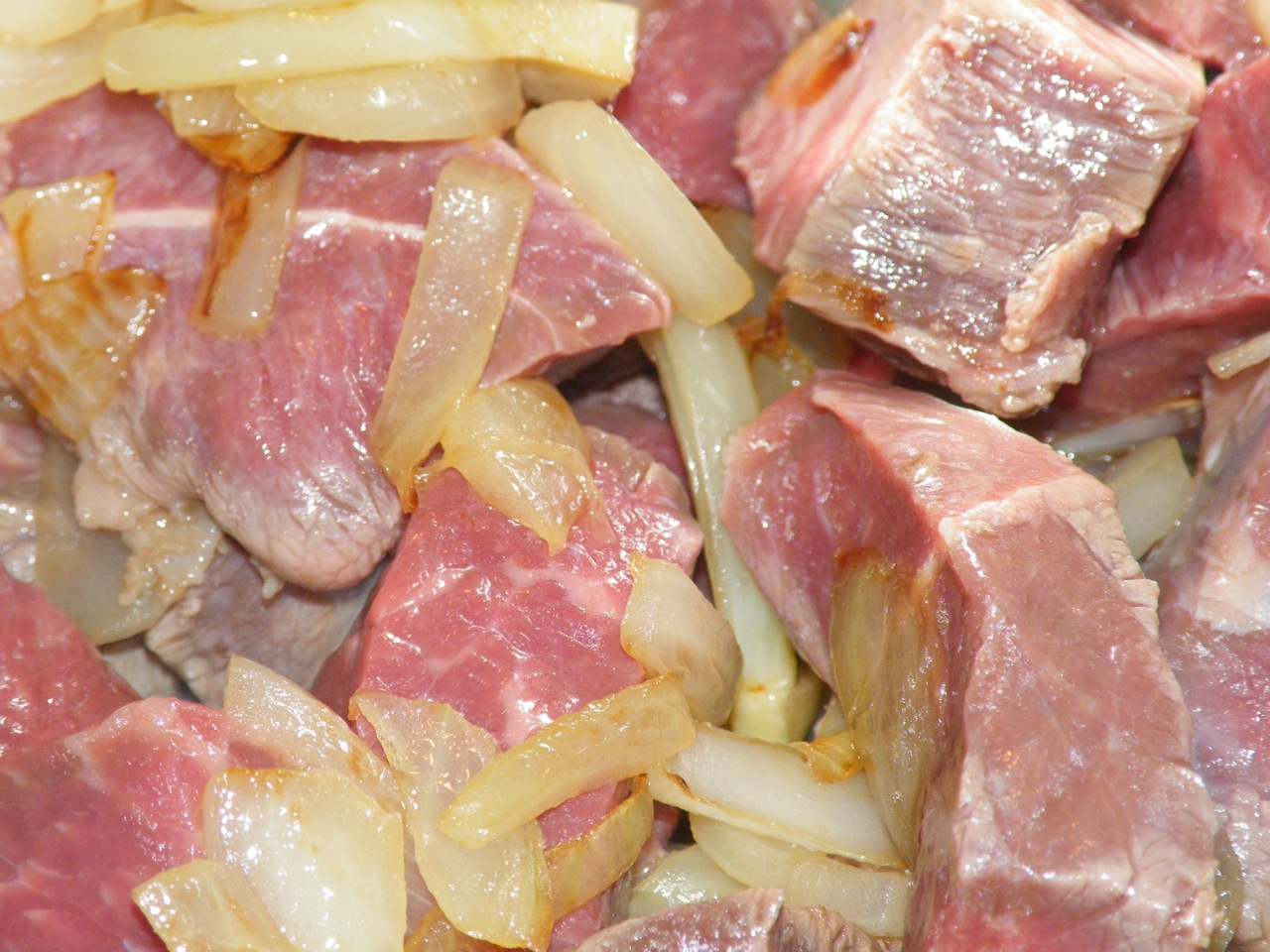
Outside Hungary, the word goulash usually refers to a thick beef stew. Inside Hungary, gulyas is a soup. This distinction matters more than it might seem, because it reveals how far the dish has travelled from its origins and how much has been lost or changed along the way.
What follows is an attempt to trace the dish back to its roots, explain what authentic Hungarian goulash actually involves, and provide a reliable recipe based on the way it is still prepared in the countryside today.
Origins: Cattle Herders on the Great Plain
Goulash began with the gulyasok, the cattle herders who worked the Hungarian Great Plain (Alfold) from the medieval period onward. These men spent weeks at a time in the open, moving herds between grazing grounds. Their cooking was limited to what could be prepared in a single pot (bograc) over an open fire.
The original version was remarkably simple: beef, onions, and whatever was available. The meat was often dried in the sun first, then rehydrated and simmered. Paprika was not part of the recipe until the spice became widely available in Hungary during the 18th century, when it transitioned from an ornamental plant to a kitchen staple.
In Hungary, goulash is not a stew. It is a soup. What the rest of the world calls goulash, Hungarians call porkolt or paprikas.
This is a fundamental point that confuses many visitors. When you order gulyasleves in Budapest, you will receive a clear, brothy soup with chunks of beef, potatoes, and csipetke (pinched pasta). If you want the thicker, stew-like dish that most of Europe associates with the word, you need to order porkolt.
The Essential Ingredients
A proper Hungarian goulash requires very few ingredients, but the quality and handling of each one matters considerably.
Beef
Shin or shank is the traditional choice. These cuts have connective tissue that breaks down during long cooking, producing a rich body in the broth. Avoid lean cuts like sirloin, which become dry and stringy over the hours of simmering that goulash requires.
Onions
Goulash uses a large quantity of onions relative to the amount of meat, typically at a ratio of about one to one by weight. The onions are cooked slowly in lard until they are completely soft and beginning to break down. This onion base provides the foundation of the dish's flavour.
Paprika
This is where the dish stands or falls. Hungarian sweet paprika (edes) is the primary variety used, often supplemented with a smaller amount of hot paprika (csipjos or eros) for depth. The paprika should be added off the heat to prevent it from burning, which makes it bitter. Good paprika should smell sweet and slightly fruity when you open the container. If it smells dusty or stale, it is too old.
For sourcing quality paprika, the Wikipedia article on paprika provides useful background on the different grades and their characteristics.
Other Ingredients
Caraway seeds are essential and should be lightly toasted before adding. Garlic appears in most recipes but in modest quantities. Tomatoes or tomato paste add colour and a slight acidity. Green peppers (Hungarian wax peppers, not bell peppers) provide a fresh note. Potatoes are added toward the end of cooking.

Image: Wikimedia Commons. Hungarian paprika comes in several grades from sweet to hot.
The Recipe
Traditional Hungarian Gulyasleves
Ingredients:
- 600g beef shin, cut into 2cm cubes
- 500g onions, finely diced
- 3 tablespoons lard or sunflower oil
- 2 tablespoons sweet Hungarian paprika
- 1 teaspoon hot Hungarian paprika
- 1 teaspoon caraway seeds
- 2 cloves garlic, crushed
- 2 medium tomatoes, peeled and chopped
- 2 Hungarian wax peppers or 1 green bell pepper, diced
- 300g potatoes, cut into small cubes
- 2 litres water or unsalted beef stock
- Salt to taste
For csipetke (pinched noodles):
- 1 egg
- 100g plain flour
- Pinch of salt
Method:
- Heat the lard in a heavy-bottomed pot. Add the onions and cook on medium-low heat for 15 to 20 minutes until soft and translucent. Do not rush this step.
- Remove the pot from the heat. Add both types of paprika and stir quickly to coat the onions. The residual heat will bloom the paprika without burning it.
- Return to heat. Add the beef and stir to coat with the paprika-onion mixture. Cook for five minutes.
- Add the garlic, caraway seeds, tomatoes, and peppers. Pour in the water. Bring to a gentle boil, then reduce heat to a bare simmer.
- Cover and cook for approximately two hours, or until the beef is tender and beginning to fall apart.
- Add the potatoes and cook for a further 20 minutes until soft.
- Meanwhile, make the csipetke: mix the egg, flour, and salt into a firm dough. Pinch off small pieces and drop directly into the simmering soup. Cook for three to four minutes.
- Adjust seasoning with salt. Serve hot.
Regional Variations
Goulash varies across Hungary more than most visitors realise. In the Great Plain, the traditional bogracsgulyas is cooked outdoors in a kettle over a wood fire, which imparts a subtle smokiness. In Szeged, the local version often includes more tomato and is spicier. In Transdanubia, you may encounter versions with more vegetables and a lighter broth.
Bogracs cooking remains popular at festivals, family gatherings, and competitions throughout Hungary. The annual goulash cooking contests in towns like Szolnok attract hundreds of teams, each with their own closely guarded recipe.
Common Mistakes
Several errors consistently appear when goulash is prepared outside Hungary:
- Adding flour: Authentic goulash contains no flour. The body comes from the onions, the collagen in the beef, and the starch from the potatoes.
- Using sour cream: Goulash does not contain sour cream. That is paprikash. Conflating the two is the single most common error in international versions of the dish.
- Burning the paprika: Paprika must be added off the heat or to liquid. Direct contact with a hot, dry pan produces a bitter, acrid flavour that ruins the dish.
- Insufficient cooking time: Goulash cannot be rushed. Two hours is a minimum. Three is better.
- Wrong cut of meat: Lean cuts produce dry, flavourless goulash. The fat and connective tissue in shin or shank are essential.
Further Reading
For deeper exploration of Hungarian culinary history, the Wikipedia article on Hungarian cuisine provides a comprehensive overview of the country's food traditions. The Hungarian National Tourism Office also maintains information on culinary tourism in Hungary.